A cactus plant that has grown in SDM College of Dental Sciences premises near Sattur in Dharwad is looking for a place in the `Guinness Book of World Records’.
Known as `Cereus peruvianus’ in botanical terminology, the 77-foot plant is still growing….
The college authorities have erected a tower to support the plant. Incidentally, the current world record stands in the name of a cactus in Narayanpur of Dharwad. The cactus grown at Pandit Munji’s house in Narayanpur was 72-foot tall when it made an entry into the `Guinness Book’ in 2004. Now that plant has been reduced to 56 feet as it has broken.
A very interesting article about a very interesting plant. But no picture. I wonder what I can find on the googles?
I wonder why they call it cyclops? Anyway, we get questions. I suppose I should refer you to my youtube video about Aeonium bottom leaves, which answers so many questions in less than a minute.
On to the question.
Hi,
I bought an Aeonium “cyclops” from you last September. It’s about 20 inches tall with 11 branches. It’s indoors, but gets plenty of light. I’d say that up until about a month ago, it was thriving. But in the last month I’d say about half of it’s foliage has dried up and fallen off. At this pace it’s going to be bare in a few weeks. I don’t notice anything different, except on one of the branches on the backside of the foliage has some droppings that visual appear to be like a home repair caulk. Is this normal or do you have any suggestions?
Thanks,
Michael
Michael,
Can you send us photos, especially of the backside?
You may have a pest, but then the Aeonium is a winter-grower and will go dormant in summer, often losing half its leaves off the bottom.
Peter
And Michael does send along photos, after the break… (more…)
Astrophytum (Digitostigma) caput-medusae, the Medusa’s Head Astrophytum, is one of the most spectacular recent discoveries in the succulent world. Photos By Kevin Belmonte and Paolo Panarotto
Equally zesty are D’Arrigo’s salad dressings: Cactus Pear Vinaigrette is wonderful… A dash… zests up a colorful and healthy side dish of green lentils, red quinoa, green cauliflower, feta cheese, parsley and chives (pair with 2006 Tondre Grapefields pinot: a divine toast to the Central Coast).
We use latin names here on the cactus blog, but this is apparently a controversial issue. We often get people at the nursery asking for something by a common name, and all too often they’ve made up the common name themselves! Really, it’s true. And that’s the thing about common names, there are often many common names for a single plant and many plants have the same common names. So what to do?
When it comes to palms, there are evidently hordes of people to whom anything green must be a palm.
As evidence I present these non-palms: Ponytail palm, cardboard palm, traveler’s palm, sago palm, lily palm, Mexican palm, sedge palm, coontie palm and palm grass which, by the way, is neither a palm nor grass.
And speaking of grass, here are a few plants commonly misrepresented as grasses: Mondo grass, Aztec grass, bear grass, fiber-optic grass and sweet flag grass…..
We’ll tackle cactuses next and point out that pencil trees and many other Euphorbias are frequently tagged as cactus, while chain-store labels often proclaim a vast range of non-cactus succulents to be cactuses.
True enough. But on the other hand, the word cactus does not only refer to plants in the cactus family (cactaceae) but also to:
Any of various succulent, spiny, usually leafless plants native mostly to arid regions of the New World, having variously colored, often showy flowers with numerous stamens and petals.
Any of several similar plants.
So now you know that nobody knows nothing, anyway, so call them what you will. Only a pedant would dare to correct you. Why do you ask?
My brother makes these toys, see, and he sells them too, and we sell them at the store too, and I put together the website, and they get reviewed.
I don’t know who the kid in the picture is, but he sure looks happy.
The mailman came the other day while Ryan was diligently helping me plant my garden. What he brought tore Ryan away for the remainder of the day. He brought a Big Eye Dummy, and to be specific, we received Milton the cat. I have to be honest, I was surprised this cute little plush doll could keep Ryan’s attention for as long as it did. It has been hours total at the least.
Jim Averbeck with the blooming cacti on his back patio Wednesday morning. – Pat Kuhl/BND
I find it interesting that blooming cactus are such big news that they make the newspapers. Yesterday it was an agave and today it’s echinopsis (probably).
I wonder where Belleville is. I would guess Indiana. Should I read the whole article and not just look at the pictures and report back to you? OK, hold on…. (more…)
Apparently there is a whole collectible subset of cactus toothpick holders. I never knew. It must be something about the spines and the toothpicks. Of course, you could use the spines off the Stetsonia coryne, also known as the Argentine Toothpick. So I figure I’ll feature a few more of these toothpivk holders this week. Aren’t you lucky!
This is one of the larger cactuses to come around. Did I just type cactuses? I did! Maybe I should change that to cacti, although cactus is it’s own plural, too.
Have you ever wanted to travel in the summer somewhere other than the West and still be able to see cactus on your journeys? Well, the Minneapolis Examiner has a little suggestion for you. Now, I can’t say I agree with this suggestion, but I can pass it along.
Blue Mounds State Park
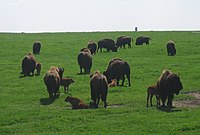
This is a great park to visit at any time, but June and July offer a unique enticement—the park is an ideal home for Minnesota’s only native cactus, the prickly pear, and it sends up its canary yellow flowers during those months. The cactuses are tucked in around the outcroppings of ruddy Sioux quartzite. The rocks jut up—100 feet, in some places—from the tranquil sea of prairie grass. Clamber (carefully) up the rocks to take in sweeping views. The park’s herd of bison adds to the step-back-in-time atmosphere, and the abundance of tallgrass prairie birds makes for a fun spotting game. Camping is available (and there are showers available for the fastidious among us); check the Minnesota DNR Web site for details.
I have to say, I am deeply offended by this product. I can’t quite articulate why, but trust me on this, if you buy it you will find yourself the victim of bad karma.
Of course, “Little Plum” is a hybrid, so who knows.
These blog posts where I farm out the tough work is pretty easy on me. I wonder what any of that info above really means. Well, let’s start with the word “Dicot.”
Dicot: Simply put, the first leaves of a flowering plant that come out of a seed are called cotyledons, and if there are 2 leaves the plant is called a dicot and if there is only one then it is a monocot.
Can a Venus flytrap thrive outdoors all year in the foggy west side of Daly City? There are days where there is plenty of sun, but the temps. are usually around 50’s-60s. Do I need a terrarium?
Michael
Michael,
Venus Flytraps are hardy in much colder climates than ours. They do require plenty of sun, and must be planted in a bog environment with slightly acidic soil.
But just to be clear, hardy outside means it will die back to the ground every winter, and spring up new every spring, fresh and green and ready to eat bugs.
Peter
Editors Note: Daly City is just south of San Francisco.