
Philip has a very nice post of photos of the restoration of Chrissy Field in San Francisco.
It's a Wavy Individual
Apparently this is a more rare form of this plant.

Euphorbia horrida v. striata
They can grow to 3′ tall, getting wavier as they go. Tiny unisexual flowers are grouped into cyathia. The seedpods have caruncles.
Isn’t science wonderful?
Read More...
Read More...
Late Night Comedy Gold
Read More...
Read More...
Don't Worry, It's a Fresh Garden Recipe
Just for you, the Casa Grande News let’s you know when the next class will be to learn how to make fresh cactus fruit punch.
Apache Junction resident Jean Groen, author of “Foods of the Superstitions,” will teach visitors how to harvest opuntia cactus fruits and extract the juice from the prickly pear without turning their hands into a “porcupine of cactus spines.”
The class, which is free with regular admission, will be repeated Aug. 23 and Sept. 1.
I guess you need to be midway between Tucson and Phoenix to take advantage of this news. Sorry about that.
Read More...
Read More...
Red Fruit Bursting out at the Smithsonian
I love the Smithsonian. I always visit another one of their museums every time I’m in Washington. Plus, I go back to the Air + Space each time too. Lunar modules make me giggle.

Plate Number: 1901
Publication: assumed to be unpublished
Client: Britton, N.L. and Rose, J.N. – Size: 11×14
Remarks: unable to locate in The Cactaceae
Mammillaria miracantha (Cactaceae) – Collection: Pattison, S.L., U.S.A., Texas; fruiting plant.
Artist: Eaton, M.E. – Date unknown – watercolor
Read More...
Read More...
Bigfoot Quote of the Day
The hoax was discovered after an “expedited melting process,” Kulls wrote. “A break appeared up near the feet area … as the team and I began examining this area near the feet, I observed the foot which looked unnatural, reached in and confirmed it was a rubber foot.”
D’oh!
Read More...
Read More...
The Gardens in Pensacola are Beautiful
I never thought I’d have cause to use that headline, stored in the back of my head for years. But now, the Pensacola News Journal has convinced me to break it out and print it bold and loud.
With summer in all its glory, there is nothing better than strolling through (the Milton Garden, located on the Pensacola Junior College/University of Florida Campus in Milton) filled with brightly colored flowers and plants.
“We have one of largest collections of day lilies in the area.”
Reason enough? I was still feeling a little skeptical… But no, that’s not all.
“We decided to see how the cactus would do growing here,” Thetford said. “Since traditionally cactus enjoys dry soil and extreme heat, we weren’t sure how they would grow in this climate since we have quite a bit of rain. So far, they are doing very well.”
Well, now I’m convinced. The gardens in Pensacola really are beautiful.
Read More...
Read More...
Yarrow Bloom Sprays

Achillea “Heidi” is a burgundy yarrow, but the blooms, even on one plant, come in pinks, reds and whites too. Alongside the yellow and terra cotta yarrows at the nursery, and some other pink and burgundy ones too, they are a proliferation of colors. Very beautiful. I recommend them for along sidewalk strips because they can take some abuse and some traffic and come back with big bloom sprays throughout the year.
Read More...
Read More...
Midwesterners are Afraid of Cactus
Really they are. According to the latest news from the midwest’s farm industry news source, Farm Gate, that is.
Global warming or not, you may have cactus growing on your Cornbelt farm, and it may become a sticky issue to deal with, literally and figuratively. The pricklypear cactus has become an invasive specie of sorts, making its way from the desert southwest to pastures and fencerows of the Midwest. And you may prefer to wrestle a grizzly bear than a pricklypear.
It’s probably true. They’ve become a real problem for cattle in Australia, and if they escape from the fencerows into the fields, and there’s a big drought, then the cows will feel the hurt.
Read More...
Read More...
Chicago Cactus
Carnwrite went to the Chicago Botanic Gardens and cactus show and shared some photos. Nice melocactus, and the dioscorea is to die for.
Read More...
Read More...
Link of the Day
Pastor Lars has some very nice blooming ferocactus. It’s been raining in Arizona this year. You could check it out, you know.
Read More...
Read More...
Cactus and Snakes, Together Again
Slithering out after it was a blacktail rattlesnake, which settled into the limbs of a mesquite tree that shades a newly formed section of the Arizona Trail….
Although the rattler appeared to have moved on, ocotillos, prickly pear cactus, wildflowers and other plant life had perked up after the latest round of monsoon showers.
Read More...
Read More...
Plant News From Afar
In New Mexico they’re thinking about drilling on a mesa that may harm the groundwater and kill off the local cactus.
The mesa is a scenic 1.2 million-acre expanse of yuccas, cholla cactus and knee-high gramma grass. Drilling opponents warn that groundwater could be contaminated by oil and gas production.
And then in Boston they’re giving away succulent cuttings.
I cut off the top 4 to 6 inches of young stems… Then you need to practice patience….
If the leaves are thick – as they are with succulents – I may… force the plant to expand its root structure to ensure survival.
Sure you do.
Next on our trip around the country it’s off to the Tucson desert where the farmers are hoping for some rain.
The monsoon season, which officially started June 15, has been wetter than normal from Douglas to the Organ Pipe Cactus National Monument.
I’m sure the cactus are happy. Where else should we go? Any place else on our map? No? OK, then.
Well, I forgot about Florida. Shall we see what’s going on in Florida? They’re feeling the drought there.
What exactly does the term ‘xeric’ mean? That’s a very good question…
(A) planting scheme grouping plants by water needs; uses modern water application techniques; minimizes open areas in the garden; improves the soil; and sharply limits high-water plants like turf.
Remarkably, many of our favorite plants do nicely with less water (like) Jatropha.
Well, that was a fun voyage around the country looking at drilling and watering and planting and cutting. Tomorrow I think we should all go to Western Ontario and visit the The Sherwood Fox Arboretum together. Shall we say 2pm? See you there.
Read More...
Read More...
California Native Plants on the Move
How quickly can plants migrate? We heard this report on the radio, and they have a slide show to go with it.
Scientists say the state’s plants are at risk of collapse unless they migrate or are moved to refuges. According to a new study, two-thirds of California’s unique plants, some 2,300 species that grow nowhere else in the world, could be wiped out across much of their current geographic ranges by the end of the century because of rising temperatures and changing rainfall patterns.
Marin will look Baja. Berkeley like Bakersfield. That’s the projection of climatologists for the end of this century.
I’d guess that California cactus and dudleyas and sedums are probably going to be able to increase their range. But Berkeley will look like Bakersfield??? Oy, the pain.
Read More...
Read More...
Link of the Day in Short Form
Read More...
Read More...
Cool Drink Recipes
Hugh has a recipe for limeade that includes the latest succulent rage in sweeteners.
2 cups water
the juice of 6 Mexican or key limes
2 tablespoons agave nectar (or more or less to taste)Stir it. Ice it. Drink it.
Read More...
Read More...
Cactus Milk for Sale
A newspaper in North Carolina tries out new products so you don’t have to and asks a good question.
The marketing: Both products ask me if I “want skin she can’t wait to get her hands on!” The shower scrub claims it contains cactus milk that exfoliates your skin, leaving it smooth and energized so she’ll keep coming back. (What is cactus milk?)
What is cactus milk? I should be able to handle that one for them. But no, I can’t maybe we could check wikipedia. Nope, nothing there. Google? Well, with this blog entry, I’m going to be the number one result on google for “cactus milk” by the end of the day. Just try it out. Anyway, Euphorbia abyssinica is sometimes called the Milk Tree, or even Milk Cactus, though it is not a cactus at all.
Read More...
Read More...
Southern California Restoration Under Way
In San Diego, they’re finishing up restoration efforts.
An environmental team is nearly finished with two major restoration projects of endangered plants at Otay Ranch in Chula Vista.
One is the Otay tarplant, which has branching stems, green leaves and small yellow petals.
The other is the maritime succulent scrub, an assemblage of plants and vegetation that consists of coast cholla cactus, barrel cactus, jojoba and other succulents.
That seems like a good thing. I’ve never heard of “maritime succulent scrub” as a way to refer to a collection of coastal cactus, and probably some dudleyas in there as well, maybe a sedum or two.
Read More...
Read More...
Around the Magazinosphere
This Old House has rediscovered drought tolerant gardening now that the heat of summer is here.
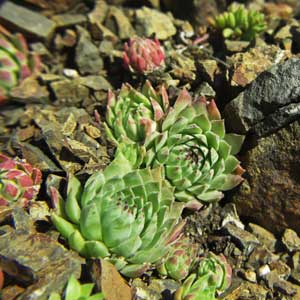
Succulents: Ideal Plants for SummerSempervivum tectorum (which along with the unrelated Echeveria x imbricata is commonly referred to as hens and chicks) is right at home in tight spots, such as a rock garden. Sempervivum ‘Carmen’ (shown) can also be nestled with smooth stones in a shallow, quick-draining garden.
Read More...
Read More...
Weekend Video Blogging – Cactus Painting
Read More...
Read More...
What do Cactus and the Olympics Have in Common?
I wonder if there is any connection to be found between these very exciting Beijing Olympics and the world of cactus? I wonder what comes up if I google olympics and cactus together? I wonder if there are any cactus in China, maybe next to the birdsnest? Maybe another venue is called the cactus spike?

Well, I don’t know what this “Air Jordan 6 Retro 2008 Olympics White Varsity Red Black Cactus” Nike sneaker has to do with either the Olympics or cactus, but you can buy it now. I’m sure it will make you faster.
Read More...
Read More...
High Design
You know when Philippe Starck uses a new theme in his designs that it’s hit the cultural moment. Here we have a Starckian cactus, Joe Cactus.

Very sleak, very moderne, practically the 1930s. Why, if I had to guess, I would think this was a juice squeezer, but no, it’s an ashtray. Très classy. Now all you cactus collectors out there can rest easy; you’re no longer a weird subculture, you’re a full-fledged trend.
Read More...
Read More...
Link of the Day
Nice photos at the Succulent Dish. Three haworthias and a gasteria.
Read More...
Read More...
Short Post in Which I Quote a Headline
Utah County man would like his peyote back.
That was fun.
Read More...
Read More...
No Pictures
The Lakeland (FL ) Ledger has an article about monstrose cactus, but no pictures. How can that be?
Monstrose plants include cactus species that ordinarily display prominent ribs but sometimes grow atypically into non-ridged barrel, sphere or column-shaped specimens.
Much more dramatic, however, to the point of being radically disfigured, are cactus with misbehaving growing points that produce wavy or fan-shaped growth. Some of these distorted cactus are said to have a cristate, or crested, form.
Outstanding monstrose varieties are frequently found among Cereus cactuses such as C. peruvianus, jamacaru and hildmannianus. These wonderfully twisted plants shape themselves into eye-catching, living sculptures.
Equally awesome are monstrose varieties of Opuntia cactuses, including O. tunicata monstrosus and the striking O. vestita cristata.
Also densely festooned with spines are cristate kinds of Mammillaria cactuses, such as the white-spined M. lanata and the golden-spined M. elongata.
Yes, but where are the pictures?
Read More...
Read More...
Succulents Along the Trails in San Diego
Apparently there are native succulents along the Bayside Trail in San Diego, so the San Diego Tribune says. The trail itself is alongside the bay. I wonder what succulents they’ll find there?
Wildlife along the trail includes the California striped racer, the Western fence lizard, (and )the California whiptail.
Lizards are good. Any sign of the succulents yet?
In the background, visitors may hear a foghorn sounding at 10-second intervals.
That’s nice too. They seem to be near some WWI and WWII sites.
Near the lighthouse is one of the most attractive plants flowering this season: dudleya, known as “live-forever.” The gray-blue succulents have foot-long stems sprouting pink flowers. Another highlight is the tall and endangered Shaw’s agave.
There we are. That’s two. I wonder what Dudleya species they found?
Read More...
Read More...
Friday Whippet Blogging
This is not a posed photo. I was lucky to have the camera nearby.

Benjamin and Jaxx and Hap.
Read More...
Read More...
Big City Paper Likes Aloes
The Baltimore Sun has a feature on the addictive properties of following the latest “health” trends…. I mean an article about the latest health benefits of Aloes, which I heartily endorse.
“Aloe is part of my overall health and beauty philosophy,” says the Pikesvilleresident, who typically keeps an aloe plant handy for cuts and mild burns. She also purchases packaged aloe products at stores such as Whole Foods Market.
“I buy aloe liquid by the gallon, keep it in the fridge and drink a few ounces cold. It tastes like fizzy water,” she says. “I’ve noticed my digestion has improved.”
Impressive.
Read More...
Read More...
Milky White Sap and Bright Red Explosive Seed Pods
What more could you want out of a plant, anyway?

Euphorbia leucodendron
These green sticks with tiny green leaves are very similar to the more common Pencil Cactus, Euphorbia tirucallii which also are sometimes known as Firesticks when they have red tips. Anyway, this species, not that other one, is hardy outside in the Bay Area. So we like it. And you do too. But just don’t get any of that milky white sap, i.e. poison, on your lips or in your eyes. It will hurt like the dickens. Hospital visits may ensue. Some crying, some burning.
Read More...
Read More...
Big City Paper Likes Succulents
The New York Times gets plant questions.
Q. I’ve been trying to plant moss between the paving stones on my terrace, but it keeps dying. What am I doing wrong?
A. There are a lot of reasons this temperamental little plant might not want to grow in your garden…
Many plants will thrive in tight crevices (including)… rock-hugging succulents.
There you go! Succulents are the newest addition to the New York Times’ list of acceptable terrace plants for New York.

