…so I guess this makes sense.


and Ross Valley Nursery
…so I guess this makes sense.
They put an agave design on the side of a Keds kids shoe and look what happened – now the kids are drinking tequila and falling down drunk.

The Blue Agave Cactus Keds, perfect for drinking tequila on Taco Tuesdays. (Tequila is made from the blue agave cactus.) Created by ahoward50 on Zazzle.
In Arandas, Jalisco, Mexico, one of the two main Tequila producing areas in the world, there is a statue of an agave. This is strange because there are agaves everywhere you turn in Arandas, what with it being one of the two main tequila producing areas in the world.

Arandas began as a trading post and rest stop for weary travelers, run by two feuding families who fought over each other’s land holdings.
I don’t know what makes this line of porcelain plates and settings “Agave” but I like them, so what the heck, here you go. You can see the full line of plates here.

Sugar Bowl

Creamer
They do say this about the name and the style:
Agave evokes the class and charm in every moment of the day.
Now it all makes sense.
If you aren’t checking out National Geographic’s photo of the day, you really should.

Dead Trees, Grand Sable Dunes, Michigan, 1991
Photograph by Phil Schermeister
Long-deceased trees cling stubbornly to the steep flanks of Grand Sable Dunes in Michigan’s Pictured Rocks National Lakeshore. The precipitous dunes, left behind by ancient glaciers, rise some 300 feet (90 meters) above Lake Superior and spread over 5 square miles (13 square kilometers).
(Photo shot on assignment for, but not published in, “Big Lost Country,” March/April 1991, National Geographic Traveler magazine)
…in the shape of a cactus. What more could you possibly ever want. This is it, everything put together into one flattering shape. I could wax poetic for months and never really get to the heart of the matter as clearly as this vase does. It makes me feel inadequate. I may have to stop blogging. Certainly, I should stop my limericks.

Signed on bottom by what appears to be Christian Tortu –Luminous clear blue and amber tone glass in potted cactus shape –Could be used as vase, holes in cactus arms also see photo) –Mint condition
Size: 9w x 5d x 19h
Condition: Mint
Better hurry, this item won’t last long (it’s an auction).
Yes, I don’t understand it any more than you do, but Martha Stewart is selling a barrel cactus.

This unique, barrel-shaped cactus is said to grow towards the south, leading to its “compass cactus” nickname. A wonderful selection for the cactus aficionado or for the cacti novice.
Stately Barrel Cactus is traditionally fast-growing and can eventually yield small, pineapple-shaped yellow flowers around the crown.
Well, that’s a whole lot of oddity. It’s a golden barrel, not a compass barrel, so it won’t “grow towards the south.” It’s nickname is “mother-in-law’s seat” which is even more entertaining than the made-up “compass cactus”. It’s not fast growing, and it won’t yield pineapple shaped yellow flowers. It will be at least 20 years before it flowers at all, and then they will be small yellow flowers like this.
If you have more than one of these 20 years from now and they are both in bloom at the same time, and they were cross-pollinated, then you may get pineapple-shaped fruits, like a pineapple is a pineapple-shaped fruit too.
How do I know all this? I bought one of these from Martha 15 years ago already and I still haven’t had a single pineapple-shaped flower on my compass cactus that doesn’t face south! I’m so mad I could steam an asparagus.
But I don’t hold it against dear Martha. Oh no, I hold it against those minions of hers who have always been plotting against her, trying to ruin her, trying to bring down her empire. But they won’t succeed! Not on my watch.
Ever felt fear of your cacti? Chris Walken has. He has a solution he wants to share with you.
It’s a cactus pipe, or so the info says. I don’t see it. It looks more like a frog pipe to me:

Why would you want a cactus pipe or a frog pipe anyway?

I like the old fashioned corncob pipe myself, not that I’ve ever used one.
The only pipe I’ve ever had use for is this one:

On the other hand, this one is an actual cactus pipe, by which I mean a peace pipe made from cactus:
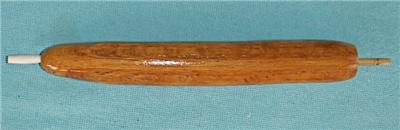
I don’t know what makes this one a pipe, since it looks more like a corndog, but you know, I don’t need to know everything.
Flight of the Conchords, as if you didn’t already know that. You can join their facebook page too.
Here’s something that’s listed as a “Knitty Cactus” for only $24. Truly a bargain. But is it a cactus?

From various cacti in the Hylocereus genus, like the Red Pitaya (Hylocereus undatus). It’s a video about harvesting the fruit. I think. It’s mostly in french. I think. Some english comes through. Anyway, I’m sure it’s delicious.
Yes! The toys have the final say in the matter, so who am I to argue with them? Now, technically, you may argue this is not actually a toy, but rather a Lifesize Cardboard Standup – a decorative asset to any home and garden. And you’d be wrong by my reckoning. It comes from a site called Toy Impact and is listed under a category called Toys. So there, point taken.
But it would make such a lovely addition to any fine living room area.

But wait! Don’t make your decision yet. We also have this one!

It’s not as festive, but it is a little more classy! But what about accessories? Are there accessories to go with it, you may ask? But of course. Try out this lifesize cardboard cutout for size:

And these adorable accessories too:

Oh for crying out loud, that’s enough!
Cactus Toys are making the news left and right. There must be a fad or something. I’ve never heard of such an accumulation of toys with a single theme before. I feel like we’re the winners in a lottery!

They say this toy will,
Bring the look of the dessert to any occasion.
It may even remind you of the desert too. I know it reminds me of the Mojave at sunset.
We’ve been featuring a series of very nice and happy cactus toys in the news recently.
This cactus toy seems not to have been a big success. In fact, according to the website, Cactus Reno was in fact a complete flop. Maybe it was too spiny for the little kids. It certainly looks dangerous.

This new toy seems to be manufactured by a mysterious character named jack683, from Montevideo, Uruguay. Don’t they have child safety laws in Uruguay?
Today’s Cactus Photo of the Day comes from the band King Kahn and the Shrines. I don’t know much about this band except what they say themselves on their site:
“WHAT IS?” the exile Canadian Enfant Dingue, KING KHAN, inquires platonically as well as categorically through the brand new LP from the SHRINES and snatches the master question right out of the astonished community’s mouth.
After reading that, I still don’t know anything about the band. However, the song No Regrets on their Hazelwood page is pretty good.
So here’s the picture of King Kahn and a beautiful cereus:

Fantastic.
You can buy a lovely and ornamental cactus needlepoint at Pastimes Needlepoint online, featuring a Saguaro with ribbons and what looks like an Echinocereus in bloom. Plus some rocks and mountains and stuff.

Kate, now you know.
Now I wouldn’t normally post a commercial, even if it does feature a cactus, unless it’s not a US ad. This one is not a US ad. And on top of that it features not a cactus but a “cactus kid” so it’s freaky enough to deserve a looksee.
You too can make money from your extra greenhouse you have lying around. According to Greenhouse Toolbox, all it takes is to turn the plants you grow in there into mixed dish gardens.
If you plan a retail business – no matter how small – you will want to feature some dish gardens. Perhaps you have a friend who designs interesting and colorful ceramic bowls. If so, why not team up with her? She’ll earn money from the sale of the bowl, and you will earn some from the sale of the plants, as well as from planning and planting the tiny garden….
Succulents, wax begonia, pilea, echeveria, kalanchoe, peperomia, and bromeliads are some of the accent materials I have used in dish gardens….
If you carry a line of figurines in your shop, you may be able to sell more of them by including them in the dish garden….
A friend of mine made several hundred dollars from the sale of succulents planted in gilded, individual aluminum-foil pie pans.
Now that you know the secrets, you too can be rich and famous. Just don’t tell anyone else.
A blog called Gardening References likes a gardening book.
Designing with Succulents by Debra Lee Baldwin is the best book ever published on the subject of succulents.
We like Debra’s book a lot too. It really is one of the most fun how-to books with great pictures and useful information. We can’t wait for her next book.
We like the Apartment Therapy blog, and have found some good stuff there, not to mention they’ve featured us a couple times too. But this is not right. They’ve found some cheap succulents at a national chain (Trader Joe’s) and figure they’re going to die anyway, so who cares.
Then we spotted these adorable succulent plantings. At $6, they’re inexpensive enough to replace if our notorious black thumb has its way.
Consumerism is just so disposable that even lifeforms are seen as disposable. Plan it out in advance – how to kill your new plant in two easy weeks.
Now I’m all grumpy – see what you’ve done to me, Ap’t Therapy!
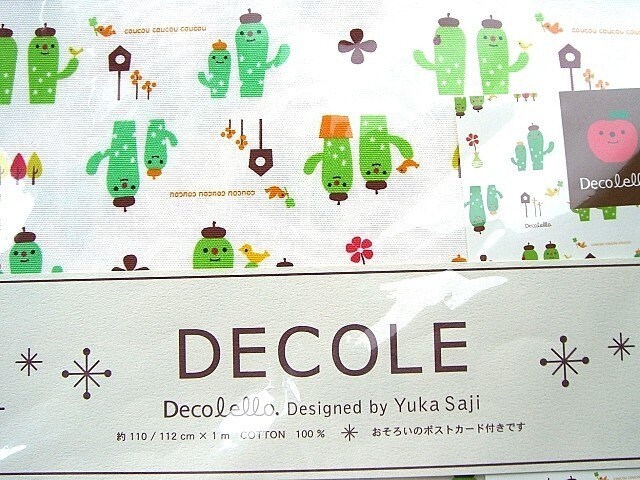
There’s a new cactus fabric design by Yuka Saji.
I just thought you would want to know.
Succulents have made it into the museum.
Palladium prints are beautiful and exotic entities — not unlike the succulents in Michael Eastman‘s images. Palladium prints are characterized by their beautiful, soft, velvety shades of gray. Images made through this process are extremely rich and detailed; think of early Steichen, Stieglitz and Weston photographs.
Eastman is a well-known St. Louis photographer whose work is in the collections of the Metropolitan Museum of Art in New York City, the Los Angeles County Museum of Art and the Art Institute of Chicago, among others. Making a palladium print takes a lot of work — typically the process requires negatives the same size as the images — but Eastman overrides this cumbersome step by combining the vintage printing technique with digital imaging.
It’s good stuff. Go look at the photo.
It’s a small business story in a small town setting with small cacti on the table. It’s also in Medford, Oregon. Don’t know what I’m talking about? Then you haven’t been to the Rogue Valley Growers and Crafters Market, or seen the cactus booth.
Moments ago, she sold a cactus each to a mom and her two sons, sending them away with this simple instruction: “Water them every two or three weeks.”
She and her husband, Chuck Timberman, have been bringing their cacti and other succulents to the market for about 10 years, setting up beneath their Timbermanor Nursery banner. Although they are a familiar sight, their booth doesn’t attract the crowds that swarm around some of the other vendors — those selling starter plants for the garden, fresh produce and flowers.
Call Timbermanor Nursery a business, if you wish. The Timbermans look at it as “a hobby that pays for itself.”
That sounds exactly like how we started. Except we’re in California, not Oregon, and in a giant metropolitan area, not a small town, and we started as a backyard nursery, not a Farmers Market booth, and we always did better than break-even. On the other hand, we do tell everyone to “Water them every two or three weeks.”
Crate and Barrel has candles in the shape of succulents.

Which is interesting, because our local Crate and Barrel Outlet bought real succulents from us to display in some of their pots.
It’s Husker Du
Well, not so much. The link to the article about dragon fruit from the Marianas Islands is no longer active. All I have left from the article is this bit:
The (cactus) fruit are also known as pitahaya, dragon fruit, strawberry pear, or nanettikafruit.
Not so spectacular after all. Maybe I can find some photos for you.
Here we go. From Wikipedia, I borrowed these pictures:

Hylocereus undatus pitayas at a market stall in Taiwan.

Stenocereus queretaroensis fruit prepared for eating
And there’s more where those came from.
William Miller Interior Design in Palm Springs likes to design with succulents during the hotter months in the desert. They have a company blog where they show you how they make mixed succulent planters using large hybrid echeverias.
This one I’ve borrowed seems to be in a shoe.

Mini succulent arrangements are a favorite solution at William Miller Design. These attractive and unique “mini landscapes” can provide a wonderful look for a centerpiece or coffee table arrangement. Taller arrangements are great on a kitchen or bathroom counter.
Here’s the 4th and final picture “borrowed” from the Arizona Daily Star‘s article about David Yetman’s new book, “The Great Cacti: Ethnobotany and Biogeography.”

“This is probably the easiest of all columnar cacti to identify just because it has this extraordinary cephalium (a brightly colored structure of wool and bristle at the growing tip of certain cacti). . . . It only grows in one small area, not even as big as Pima County, in Mexico. . . . What’s extraordinary about this, not just the appearance, those cephalia look as though they’re layered (coffee) drinks. . . . They have been wildly exploited because cactus collectors like them.”


