Hide a squirrel! Benjamin loved his, but it was too easy for him, so Hap sewed the holes shut tighter, and then it would take Benjamin even a whole minute to get them out. Smart dog. Also, a long skinny nose. But those squirrels sure are delicious.
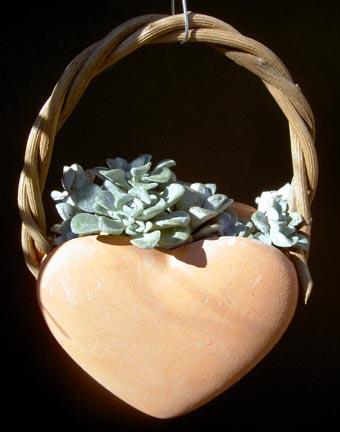
A South American succulent species that is only semi-evergreen, often dying back in the heat of August or September. But come back it will, little grasshopper.
It must get cold in Minnesota in winter. They recommend that gardeners should start thinking about houseplants. You think? From the Chisago County Press:
Now that we’ve had a few really hard frosts and our outdoor gardens begin their long winter rest, you may be inclined to turn your attention to a little indoor gardening.
That’s quite the suggestion for a newspaper in winter. Anything more specific?
Now there are endless choices of… succulents…. to brighten up our living spaces… (d)ue to the sun’s angle, winter light is less intense…. Garden Centers that are open year round will usually have a nice selection of… Christmas Cactus….
Well done. Now, can you share with us any favorites you may have? Any specific species?
My personal favorites are the many interesting succulents that can be grouped together.
Close enough.
I like having conversations with newspaper articles. It’s fun. I wonder if I could turn entire books into interview style blog posts?
Since the plural of anecdote isn’t data, I’ll grab a whole mess of anecdotes, way more than just “plural,” before claiming I have insight into the economy.
So here’s another anecdote for you to ponder without any conclusions drawn, until the end of the anecdote that is.
So I was sitting around at Cafe Trieste watching my friend Tara draw kittens for a show going up in a gallery in SF next April when I saw the barista slam an espresso drink and then he ate a slice of prickly pear fruit!
From this I deduce that cactus are going to be the next big addition to the local locavore movement. Get your cactus now while the gettings good, before they’re all eaten up. Also next spring, we’re going to start carrying organic vegetable starts for all you local Bay Area locavores.
Oh my god that is adorable. It is handmade by littletowheads and available on Etsy.com. I don’t know how to contact the artist, but I would love to carry these at the nursery.
I was sitting at Peet’s coffee drinking a classic Berkeley drink, the grande double decaf whipless soy-milk macchiato freddo with chocolate sprinkles, when I overheard a couple talking about the holidays and the drought and saying they were going to save money by buying drought-appropriate holiday gifts this year to save money.
2009 is shaping up to be the Year of the Cactus.
Actually, I prefer the whipped cream on all my soy-milk freddos.
Here I am googling random phrases, trying to help you out with your holiday shopping, and what do I find but a stainless cactus bowl. I don’t know what about this bowl makes it a cactus bowl, other than the fact that they put a cactus in the bowl for the photograph. But what a cactus it is. It is a golden barrel. Echinocactus grusonii. Nice choice.
These beautiful cactus bowls are crafted from highest-quality stainless steel, and are available in brushed or polished finishes. Ideal for miniature plants or a stylish way to store loose change.
Oh, and did I mention that you need to be in Great Britain to order? I forgot that part? Sorry.
Time Magazine had an article about Madagascar that I saw while waiting in the doctor’s office, and there’s this crazy picture of a lemur on a very spiny Alluaudia.
Many rare species, like the ring-tailed lemur, are found only in Madagascar.
Kevin Schafer / Getty
Oy, that must hurt. But whatever it takes to get away from the Time Magazine paparazzi.
The LA Times has an article about crime in Tijuana, and I don’t know anything about that, but for some reason the article is illustrated with this lovely photo.
Above, a turkey vulture keeps watch over the Baja desert from atop a cardon cactus. Credit: Bill Evarts / For The Times.
That looks like a very old Echinopsis terschecki. The vulture is trying to scare away the photographer since the photographer, who we shall call Bill, is standing right on top of the mouse hole where the vulture was feeding from just a few moments ago. Harsh.
Mandalas & More likes her christmas cactus but wants to know why it’s called “cactus” since it appears to be a succulent.
Her readers seem to think it was a marketing decision.
Well, the answer is simpler than that. It’s called a cactus because it is a cactus. In the cactaceae family and all. Not to get all botanical on you, but it’s in the Cactoideae Subfamily and the Rhipsalideae Tribe. Now you know and you are thus now an expert. Share your knowledge wide and especially with your family this year at Christmas.
Plants for sale in New Zealand! Get ’em while they’re still spiny!
SANDRA CROSBIE/Feilding Herald
YOUNG GARDENER: Alyssa Copeman, 6, of Manchester Street School removes weeds from a hanging plant, in preparation for this year’s annual plant sale on Saturday.
Well those aren’t spiny! But they sure are succulent, all right.
OK, so get ’em while they’re still thick and juicy and succulent, if you’re in the area. I wouldn’t necessarily go out of your way to get to New Zealand. Maybe from as far away as Fiji, but not Texas because that’s just too far to go.
It’s a telescope, an impressive looking structure indeed. Or more specifically, a CACTUS telescope. And it’s right around the corner in Davis. I may have to go visit this, when the weather is nicer of course.
The observational program of CACTUS included Pulsars/Supernova Remnants (Crab, Geminga), Active Galactic Nuclei (Mk421, Mk501) and the Dwarf Spheroidal Galaxy (Draco).
Why doesn’t anyone ever think to give me one of these cactus telescopes for christmas? I would be ever so appreciative. I might even name a newly discovered crab supernova after you in return!
A reader asks us to identify a plant for them. Can we figure out what the plant is? Stay tuned…
OK, there’s a photo, so it’s more likely than if there wasn’t one, that’s for sure. Let’s take a look.
But wait, that’s not all, there’s also a lovely bowl of fruit!
OK! Now, what was the question?
Hello!
Here is a plant that I have; it blooms with lovely red flowers. My
question is this:
For the first time in 10+ years, it has produced the 3 red fruits
that are in the second photo. Can you tell me what type of cactus
this is, and are they edible?
Thank you very much!
Barbara
Barbara,
It looks like you have a very nice Hylocereus. Which is also called Pitaya or Dragon Fruit, and yes it is edible (very tasty) at least as long as you haven’t used a toxic insecticide on it.
This is not strictly cactus related, but it is in a desert, so, you know, close enough, because, you know, Wow.
Petroglyphs, Aïr Mountains Mountains, Niger, 1999
Photograph by George Steinmetz
These 2,500-year-old petroglyphs, portraying figures with tulip-shaped heads and hourglass bodies, mark an ancient human presence in the Sahara desert’s Aïr Mountains.
The Christian Science Monitor’s garden writer decided to stay indoor in winter and instead of visiting gardens has visited garden blogs, including our humble blog.
The Cactus Blog actually belongs to a California Nursery, Cactus Jungle, not an individual. Although its focus is San Francisco and Berkeley, its range is actually country- and worldwide.
Can you imagine a labyrinth created with succulent plants? I look forward to returning to learn more about that. Did you know that prickly pear cactus grows well in parts of Italy? I had to laugh out loud at the discussions of Canadians and cactus — cactus with eggs for breakfast, a “cactus cam” aimed at a houseplant — do you think that’s like watching grass grow?
It’s drolly entertaining and informative at the same time.
I may have to add that quote to the top of the blog.
The endangered cactus wren is now moving into urban environments, or rather the urban areas are moving into the wren’s habitat.
Urbanization turns large areas of wild land into cities and suburbs, and has a profound effect on native speicies, changing where they live and how they interact,” says Paige Warren, an urban ecologist…
“The cactus wren is usually associated with the desert, since it builds nests in the protection of cacti and other thorny plants,” Warren explains. “However, this native species was able to penetrate the urban ecosystem more successfull the phaniopepla, and has been seen nesting in satellite dishes and other man-made structures.”
Permits now available from the Tonto National Forest.
Rafting permit applications for the Upper Salt River Canyon Wilderness are now available from the Tonto National Forest.
The Salt River… flows through oak and juniper woodlands down into striking Lower Sonoran desert vegetation with its giant multi-armed saguaro cactus as well as cactus of every description.
Several side canyons reveal oasis-like microhabitats.
Happy Thanksgiving to my American readers. And to the Canadians, Happy Fletcher Day.
Here we present a recipe that calls for both turkey and cactus. However, since it’s a frittata, it’s probably best as a morning after leftover breakfast kind of meal.
Cactus Frittata
Don’t limit yourself to serving this for breakfast and brunch, frittatas are great anytime of day or night!
Olive Oil
2 Leeks, white parts only, sliced
1 Bulb of Elephant Garlic
2 Ears of organic corn
3 Chipotle Peppers, chopped fine
4 Paddles of seared cactus, sliced into 4″ strips
1 Tomato, diced
1/2 Cup Goat Cheese
6 eggs
Turn your oven on to about 425 degrees….
You’ll have to click through for the rest of the instructions.
And if you were wondering why the recipe for what I am calling a “cactus and turkey recipe” doesn’t actually include any turkey in it at all…. Well… It’s a frittata so you can add any ingredient like turkey pretty easily now, couldn’t you, like you had to ask. Just throw in some leftover turkey and you’re golden!
Hap,
You might remember me.. I’m the one who has some fairly rare seedlings and am doing my best to grow them indoors – here in Utah.
Here is how I normally mist these tiny seedlings (still the size of rice, but more round and now sprouting some spines). I take the green box which I bought from your store and keep it at arm’s length (fully extended). I then spray distilled water in the air and kind of move the container around to get a light even mist but nothing soaking. It worked well until tonight. Tonight, the container slipped out of my hands and landed on the ground – carpet. I did my best to find and carefully isolate the 20-30 seedlings that are still going. As you suggested the medium is simply coir and finely crushed carbon on top. Obviously, after the fall, I lost about 2/3’s of everything. Things were clean so I loaded the container full of coir/carbon. Next I carefully placed each seedling in the soil. I used a small allen key to make an indentation and simply put the seedling (roots first obviously – though I was amazed at how few roots existed) into this whole. Finally, I misted again in the same way.
So, my questions are:
1.What are the likely effects of this? I assume I will lose some of these seedlings. That saddens me, but if there is anything I can do, I will do it. That includes re-doing the whoe container with fresh coir and carbon.
2.The top layer is now predominately coir. This concerns me as I know the carbon protected things by providing a non-nutrional covering. If I don’t do the step above, should I even bother with the carbon now that I have seedlings and haven’t had mold since I allowed for fresh-air-exchange (via holes in the clear plastic lid).
I sat and held these seedlings on the drive from Berkeley to Utah. They really mean a lot to me. However, I know the over-correction is common in this sort of situation and generally has bad implications. So, I appeal to you and your love for Cacti. What would YOU do? The genus is Lophophora if that matters at all (not the notorious species, but another).
I was wondering if the plant you have in your (store) was Brighamia insignis or the cultivar Brighamia insignis ‘Kirsten’.
Thanks again
catalinkel
Our Brighamia insignis are seed grown, so are the true species, not a named cultivar – which I think is sort of odd thing to do when all of them in cultivation come from only 14 remaining wild plants…) However the two named cultivars I am aware of are all tissue culture clones and not grown from seed.
It’s still a bud, but look at those spectacular colors starting to come through. (Or as we like to say in the horticultural trade; Nice sepals)
Grant and Paula sent us this bud shot from this Epiphyllum plant.
Nice plant! Notice how deeply green the branches are. That’s because it’s protected behind a screen from too much sun. Of course, I have no idea if there is a roof over it or not, so I could be totally off base, but I like it anyway, so there.
I live in “Zone 13” in Southern California and also recently purchased a “Golden Candelabra”. It’s approx. 3′ high and is beginning to show a light brown discoloration. My “Sunset Western Garden Book” provides no info on this plant. How do I best care for it where I live? Indoors, outdoors? Direct light/indirect light? Is terra-cotta really best or will any type of pot do? Do I fertilize it, if so how often?
Thanks for any info you can provide.
Rosalinda
Rosalinda,
Assuming you have the Euphorbia “Ammak” you can grow this plant indoor or outdoor in Southern Cal. You can even plant it in the ground. It can take direct sun to light shade, however never move a plant out into direct light without hardening it off first or it can get a burn. Also, if you regularly get over 100 degrees in the summer, the plant would prefer some afternoon shade.
Terra cotta is best, because it breathes, and a fast-draining cactus and succulent mix is especially important. We recommend very little fertilizer for cactus and succulents, because slow growth makes for stronger plants, but any plant in a pot needs some added nutrients. We sell our own “cactus meal” mix of slow-release natural nutrients, and you can apply just once a year for slow healthy growth. For slightly faster growth, we recommend liquid kelp once a month through the growing season.
As for the light brown discoloration, if you’d like to send me an image I can take a look at it for you, but it’s hard to diagnose plants otherwise.
Peter
I’m still feeling too dizzy to type much about this purple plant. Maybe if I drink some coffee I’ll feel more like perusing the purple plant properly, but until then, I think I’ll go take a nap. Pretty flower.