Cactus Blog Archives

London Succulents


From the London Free Press

Not many new plants will grow in our climate, but I will tell you about a few that stand out in my mind….

Willing to try something different? How about Aeoniums, one of the most ornamental of all the succulents. Even those who don’t appreciate succulents seem to like these plants. Perhaps it’s because they look like large, colourful, rubber flowers. And luckily many are easy plants to grow as well. They’re great for containers on the patio or poolside.

Poolside? In London? I’ll bet you didn’t catch that this London is in Canada. Now that makes more sense.

Read More...
Read More...

What's That?


Hello! I would like to know if you sell this in your nursery and also
please ID. Thanks.

Carolyn

Carolyn,

I’m gonna go with Kalanchoe luciae, but I’m sorry to report that we don’t grow it.
Peter
Read More...
Read More...

Cooking with Cactus Video Blog


Chef Michael shows you how.

I haven’t tried this recipe, so I don’t know if it’s any good. In fact, I haven’t even watched the video – I hate cooking shows – so I don’t even know anything about anything here, except this is the description that goes along with it, so I figure what the heck – have at it.

Chef Michael Flores show how to make his Cactus and Cabbage Salad.

Read More...
Read More...

It Hurts!


Eventually folks who live in the Sonoran Desert will get attacked by a cactus if they venture where cactus grow.

Take it from me, loyal readers, it hurts like you-know-what. I recently stumbled backward into a cactus while trying to take a photo.

The article goes on to describe in great depth the spines embedded in the thigh. So go read it! It’s Monday!

Read More...
Read More...

Herbs


I finally came up with a use for the non-opening kitchen window – ceramic herb pots hanging on the muntin.

Read More...
Read More...

Red Dye


It’s famous, it’s delicious, it’s very very red and it only grows on cactus.

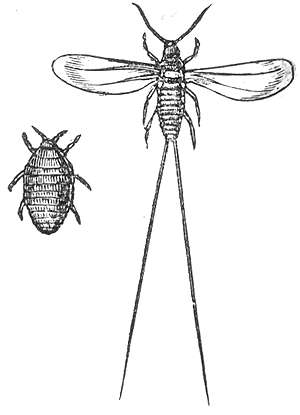
Sometimes a prickly pear… is covered with what seem to be tiny balls of cotton. Closer examination reveals the “cotton” is composed of silky threads with tiny flecks of red. When one of the white puffs is removed and placed under a microscope, the red specks prove to be cone-shaped, waxy and composed of disc-like segments. No head or legs will be visible. The “cotton” is cochineal.

Cochineal is a crimson dye, which is obtained from the bodies of insects…. (which) live only on cactus….

(B)y 1876 world production amounted to seven million pounds a year.

The Spanish monopoly on cochineal lasted centuries, leading to political intrigue, murder, espionage, bribery and more.

Wow! Now that’s some cactus bug.

Here, have a picture from Wikipedia.

Remember, these things are microscopic.

Read More...
Read More...

Alien Cactus


Must have been found near Roswell, NM.

“I can’t say for sure, but given that it seems to be associated with the meteor, it probably came from outside our solar system,” (David) Salman says in a recent video interview released this morning on High Country Gardens’ YouTube channel.

Salman says he was on a routine seed-collecting mission west of Roswell – the undisputed locus of extraterrestrial preoccupation since the late 1970s, when the alleged UFO crash of July 8, 1947 was brought to the world’s attention – when he was drawn to the unmapped meteor crater by a “faint glow.” Closer inspection revealed the light coming from a colony of small cacti yet unfamiliar to Salman…

“(I)t’s very possible that this meteor that hit near Roswell, perhaps it broke up in the atmosphere and other pieces maybe crashed in South America or Africa or Eurasia,” he says.

OK, so I looked at the date of the article and it’s 3/31 – i.e. NOT April 1st. Plus, if it’s alien, it’s not a cactus. Just saying. But if it is alien, then that’s pretty big news. Too big for just the Las Cruces Times Picayune. Alert the New York Times! The Washington Post could use a scoop!

Read More...
Read More...

"Tropical Peach"


The Echinocereus grandiflora hybrids are popping out all over.

It’s still a little early for the bees, but in the next couple weeks they’ll be getting drunk on these flowers by the gross.

Read More...
Read More...

Rik Rak Plant


Also known as the Zig Zag Plant. Selenicereus anthonyanus is often thought to be one of the Epiphyllums, or Orchid Cactus, because it’s a Central American jungle cactus that looks a lot like an epi. But it’s not. However it does have beautiful large amazing flowers. Night-blooming, which means it’s a Night-Blooming Cereus. In fact many people think the Epiphyllum is a Night-Blooming Cereus, but it’s not – This is the jungle version of the Night-Blooming Cereus right here!

Too bad it’s not in bloom right now.

Read More...
Read More...

Green Roofs Are Good Enough


Good stuff.

Some 21,000 succulents call the roof of New York City’s Con Edison’s three-story Learning Center in Long Island City, Queens….

Green roofs – roofs that are covered with vegetation -are hot, and for good reason.

According to research conducted by Con Edison and Columbia University on Con Edison’s Long Island City green roof, the average winter heat loss was some 34% lower under the green roof than under the black roof, while the summer heat gain was 84% lower on the green roof than under the black roof.

34 and 84 are some good numbers. Here’s some more:

Berlin has between 5-30% of roof space greened in different parts of the city at the time of writing.

That’s odd. Between 5-30% is a very broad range. That’s not a good number at all. I’m sorry.

Germany adds about 11 million M2 of green roofs each year.

Now that’s a good number. I think. I don’t really know how big 11 million M2 is. Is it bigger than the moon? Bigger than Yosemite? Bigger than Chicago? Bigger than Central Park in New York? Bigger than a bedbug?

Here’s a picture of the Con Ed building roof.

Read More...
Read More...

Seasonal California Native Succulent Flowers


Lewisia cotyledon are blooming this time of year. Also known as Bitterroot, these succulents are from mountainous rocky soils all around the Pacific Northwest and Northern California and into Canada too if you care to look for them. They have a nutritious and edible root that is, as you can imagine, bitter. Not delicious.

Read More...
Read More...

Big Cactus Flower


Our first Echinocereus grandiflora blooms of the year. It must be spring! And the flowers are so big you can’t even see the cactus underneath.

image
Read More...
Read More...

They Get Questions


Clay Thompson gets questions about cactus from around the country.

I am from Iowa, and I am fascinated by the saguaro cactus. Why is it that the base of the cactus does not increase in circumference relative to the upper portion as the cactus grows? Saguaros look top-heavy.

I’m not sure I understand your question. A saguaro’s circumference grows along with the rest of the plant. Do you mean a cactus should be as big around as it is tall? That would be silly. Saguaros are a bit top-heavy, I suppose, but they are fairly sturdy. And they are sort of flexible. During the monsoon, their girth can expand by as much as 20 percent as they take in water.

I would have answered this question differently. For instance, I would have noted that the questioner looks top-heavy. Why is that? Is he or she a cactus? I’m just kidding, I would not insult a questioner from Iowa like that. Maybe if they were from Kansas…

Read More...
Read More...

California Lilac


Ceanothus “Emily Brown” is a broadly mounding shrub that will get 3 ft. tall, and as wide as you would like. One of the Holly-Leafed Ceanothuses, it is deer-resistant.

Did I mention that lots of the Ceanothuses are in bloom at the nursery? I can prove it to you.

Classic lilac color and floral scented, the bees go crazy around these.

Read More...
Read More...

Purple Sage


Another California Native Sage that’s pretty and delicious with whorls of flowers of a very subtle purple color. Maybe more a lavender.

Salvia leucophylla “Pt. Sal Spreader” is only 2ft. tall or so, but it will spread 10 feet wide if you let it. That would make for a lot of bloom whorls.

Deer resistant, attracts butterflies, fragrant flowers and hardy to 25°F.

Read More...
Read More...

Monkey Flower


The first Monkey Flower of Spring 2011 is….

Mimulus “Georgie White”

Wow! That’s my new favorite Monkey Flower.

Read More...
Read More...

Updates in Walnut Creek


The Ruth Bancroft Garden is getting a long awaited and much needed makeover.

They’ve had to take out some trees and agaves that had outgrown their beds or had reached the end of their life span, Harrington says, “which has given us bigger areas to work with.”

The beds are being rejuvenated with fresh soil, building them back up to their original size, and new plants are being added. Rocks of various sizes are being included both as a mulch and to give the beds a natural look.

Erosion and compaction had brought some of the beds down below the levels of the pathways, Kemble says. And it wasn’t just a matter of aesthetics. Some of the plants were suffering from a lack of oxygen in the compacted soil.

Click the link for some great photos of the garden through the years. Big succulents.

Read More...
Read More...
    
    
  Cactus and Succulents
  Bamboo
  Perennials
  Carnivorous Plants
  Airplants

April 2026
M T W T F S S
 12345
6789101112
13141516171819
20212223242526
27282930