
Pancho, ie Euphorbia Anoplia
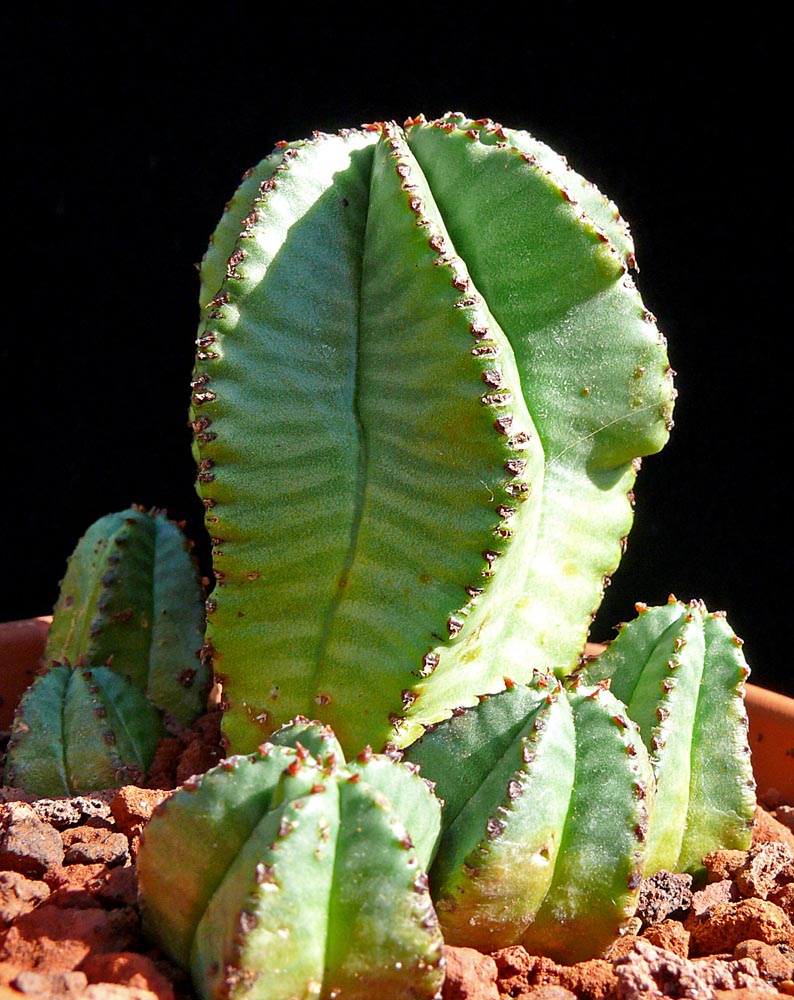
Euphorbia anoplia, commonly known as the Pancho Cactus, is a unique succulent native to South Africa. Despite its cactus-like appearance, it belongs to the Euphorbiaceae family and is not a true cactus. This compact, clump-forming species features ribbed, upright green stems with prominent vertical ridges and small, spine-like projections along the edges, giving it a visually striking, geometric look. The stems are typically 4–6 inches (10–15 cm) and may flush with red or purple hues in bright light or under stress. At the top of the stems, it produces small, reddish-purple cyathia (the characteristic Euphorbia floral structure), adding a delicate contrast to the rugged texture of the plant.
Euphorbia anoplia thrives in well-draining soil and full sun to partial shade, making it an excellent choice for rock gardens, container arrangements, or xeriscaping. Like many succulents, it is drought-tolerant and requires minimal water, particularly during its dormant period in cooler months. Care should be taken when handling the plant, as it produces a toxic, milky latex sap that can irritate the skin and eyes. With its architectural form and low-maintenance requirements, Euphorbia anoplia is a favorite among succulent enthusiasts looking for an unusual and sculptural addition to their collection.

Euphorbia anoplia is not cold hardy. It is sensitive to frost and should be protected from temperatures below 30–32°F (-1 to 0°C). In colder climates, it’s best grown in containers that can be moved indoors during the winter or kept in a greenhouse.

