
Ceraria pygmaea
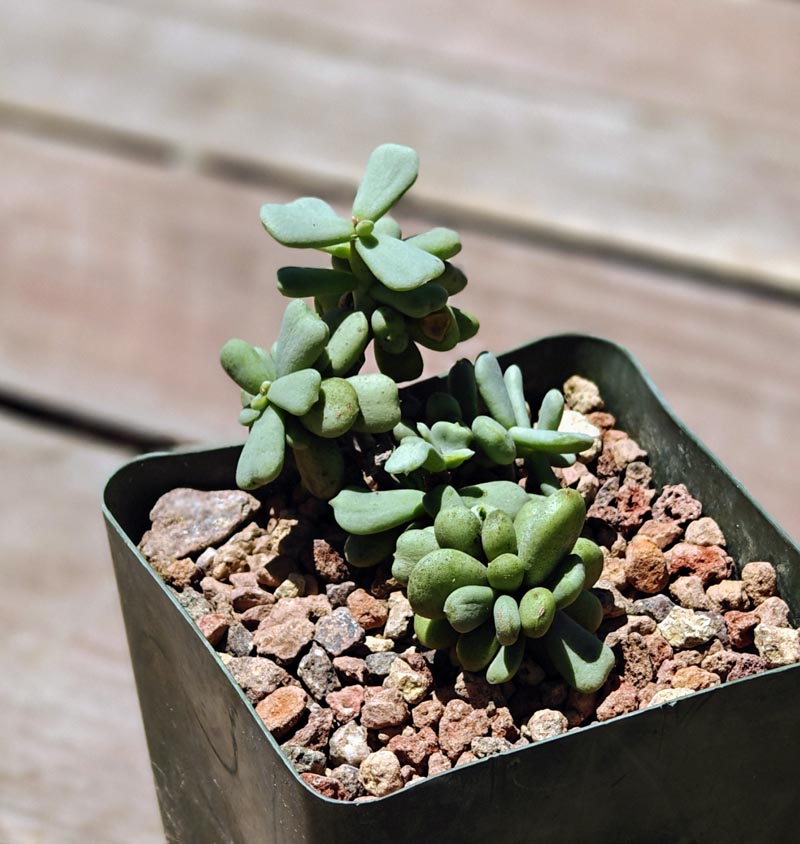
Ceraria pygmaea is a small, succulent shrub native to the arid regions of southern Namibia and northwestern South Africa. It belongs to the family Didiereaceae. This dwarf plant typically grows to a height of about 10-15 cm and forms dense mats or small clumps. The stems are woody, thick, and covered with small, scale-like leaves that are green and fleshy, often arranged in opposite pairs.
The plant is adapted to survive in harsh, dry environments, exhibiting xerophytic characteristics. It has a slow growth rate and can thrive in poor, sandy soils with minimal water. Ceraria pygmaea blooms in late spring to early summer, producing small, inconspicuous flowers that are pinkish-white and clustered in the axils of the leaves. These flowers are followed by tiny, brownish fruits containing seeds.
Ceraria pygmaea’s unique appearance and hardy nature make it an attractive plant for rock gardens and xeriscaping. It requires minimal care, needing only occasional watering and full sunlight to partial shade for optimal growth.

