Rebutia mentosa

and Ross Valley Nursery
Rebutia mentosa

Last time I blogged this plant I called it a Gymnocalycium, which it resembles, but I was wrong. It’s a Parodia. Parodia crassigibba to be precise. To be fair, though, all our Parodia crassigibbas had bloomed yellow in the past, and it wasn’t until I went searching for this exact shade of pink that I found out that this Parodia can bloom in yellow or pink! Remarkable. Also it can bloom in white or purple, according to Anderson.
The first Plumeria blooms are open.

A few more Echinopsis flowers. Always, a few more. They never seem to end around here.

Echinopsis marsoneri
And here are 2 more unnamed Echinopsises.

Such astonishing colors.


The cactus blooms continue.

Echinopsis huascha
What shall we post today? I have a backup of images since so many plants are in full bloom right now.
I know, let’s post a cresting cactus without flowers.

Myrtillocactus geometrizans crest
I wonder what the difference between flowers and blooms are, since I use the words interchangeably.
Let’s look it up!
OK, so it seems that they can be used as synonyms, or if you prefer the flower includes both the unopen bud phase and the open bloom phase. Huzzah!

Pachypodium lamerei is in bloom. This plant is 8 ft. tall, and blooming for the first time. That is in it’s nature. Looks a lot like a plumeria flower.
In honor of our big blooming Pachypodium lamerei, we’re also now selling babies too so you can have the pleasure of growing the plant to 8 feet and watching it finally bloom.

Echinocactus grusonii

It’s very windy this afternoon.
Echinopsis peruvianus

This unnamed-probably-hybridized-Echinopsis photo is one of the best bloom photos I’ve ever taken. Unlike the tiny yellow iris flower picture 2 posts down, this one has had no photoshopping. I have another picture of this one where the cactus stem is more in focus, but this shot has a richer range of colors in the flower petals. I could photoshop them together, but I think the out-of-focus cactus stem is OK for this one. Click for bigger.

This is the flower of the tiny little mini-prickly pear we had been calling Opuntia picardoi but that was a mistake. Turns out a group of small prostrate Opuntoiods from South America are called Tunilla instead.

Tunilla erectoclada
Since O. picardoi is an accepted synonym, should we change the name now that we know?
Regardless of what it’s called, it’s from Argentina, and the pads get only at most about 2″ across. The flowers vary from very red to slightly orange. The spines are profuse, and very sharp. This is a very dangerous plant for it’s size. It makes a good groundcover and does well in mixed pots with other mini cactus.

Echinocereus grandiflora hybrids
Here’s a smaller Echinopsis in bloom with a crazy coloring.

That is dazzling.

Rhytidocaulon macrolobum ssp. macrolobum
This guy has been hard to photograph. We’ve been growing them for less than a year, and we have flowers already! We’re growing a few in more sun than the others. Sometime soon we’ll have to start taking the plants apart to propagate them. And then hopefully we’ll have some for sale. So far so good!

Aloe “Blue Elf” is a really nice color of blue. Not that you can tell from this photo since it focuses on the extreme orange flowers, although the unopen buds are really more of a red. But those open blooms are a true orange-peel orange.
Here’s the blue of the leafy scrabbly aloe.

See what I mean? Toothy too.
These hybrid aloes are probably from A. humilis and will get maybe 18″ tall, with a good sized clump about 2 ft. across. That’s nice. hardy to 25F, so you know you can grow them.
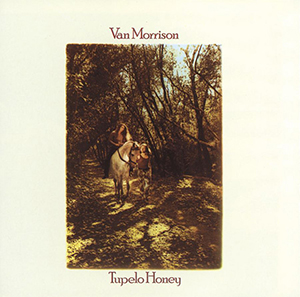
By the way, I thought you should know I’m listening to Tupelo Honey while typing this. Just thought you would want to know what I listen to while writing about Blue Aloes.

Disocactus speciosus is the remarkable epiphytic Sun Cactus from the jungles of Southern Mexico and Guatemala.
Related to the more common Aporocactus flagelliformis, Rattail Cactus, which have more recently been moved into the Disocactus genus. Similar flowers, but the Sun Cactus is much more spectacular.
Pendant stems will grow more than 3ft. in length. Easily hybridized, there are a number of cultivars out there with various and different equally remarkable flower colors.
We recommend that you grow them indoors.
What a difference a day makes! Oreocereus celsianus in bud on day 1.

Day 2 and the bloom opens! It’s the pistil and stamen!

Nice!
Oreocereus celsianus gets 10 to 12ft. tall, and is hardy to 10 °F. High altitude from the Andes, the hairs will collect fog, dripping droplets down to the roots.
While they can be grown from stem cuttings, we’ve had our difficulties.
Here’s a habitat shot from a U Texas Cactus Field Research team.

Some wonderful plants: Oreocereus celsianus growing near the border between Argentina and Bolivia.
Now that’s something.
Echinocereus grandifloras.


Dudleya “White Sprite” looks like a D. attenuata cultivar. Let me look it up. Nope. It’s either from Dudleya gnoma or Dudleya greenii.
It’s from the Santa Barbara area and the rosettes only get to about 4″ across. We find that it will produce lots of tightly packed rosettes in a year. A lot more than our D. greenii’s ever have. Of course, by a lot for a Dudleya I mean 2 to 4.

Lewisia cotyledon “Regenbogen” has these weirdly vibrant flowers. They supposedly come in a variety of colors and striping too, but all of our babies we’ve been growing have bloomed in this color, so far.
It’s definitely been Lewisia season for the past 6 weeks or so. The rains the last couple days have stopped the show, but I presume when we get sun again, soon enough, they’ll be bursting out again.

Sempervivum “Black” is more brown, but in more sun will get darker and look almost black, in the same way that my brown hair looks black. But is still brown.
Loves the rocky rock gardens, hardy down to 10F or a little below with some snow cover. Rosettes get about 6″ across with root run. Flowers are those little 5-pointed stars so beloved of plants in the Crassula Family (Crassulaceae). And… they’re white!
Sempervivum means “Live Forever” since they send out lots of chicks and the grouping can keep surviving long after the mother plant has died.

Echinopsis spachiana’s stems will get to about 6 feet tall, with a few branches. The big white flowers get to about 6 feet across, or so it seems. Maybe a little bit less.
Found in Argentina; you might want to know that while the flowers are white, the “floral tubes are very hairy” according to Anderson.
Honestly, I’m not absolutely sure about the ID on this as it is very similar to E. thelegonoides and E. thelegona. Anyone have an opinion?

Yes, that really is the common name for the Echinocereus pentalophus. Sexist? Probably. I think we should call it Wrestler’s Fingers. Non-gender specific. And spiny fingers would be good for a wrestler to have.

One of our classic giant pink cactus flowers. We call these Echinocereus grandiflora Hybrids “Tropical Pink” or was it “Bright Pink”? I forget. But it is a very big flower.

Echinocereus adustus is a very small plant with a very big very red very very flower. The flowers range from pink to orange to red, and this is the reddest one we’ve seen.
These are generally solitary, or else they are freely clumping, depending on the subspecies. They will grow to about 8″ tall. Such a big boy!

Platycerium superbum is not exactly uncommon, but it’s also not the most common of the Staghorns. These epiphytes can be grown outside in the Bay Area but we prefer them inside. They do well with a bit of extra humidity, so mist away, but don’t overwater as they are totally drought-tolerant. Let the shield and backing dry out.
These will grow quite enormous given the chance. 6 feet across? Check. 3 feet tall? Sure, why not.
And bigger in habitat – they’re from Australia, so they have to be big enough to withstand a kangaroo attack.
What’s most amazing about these is the the size of the shield itself. The fronds are also quite big, but the single nest-like shield spreads very wide.
Hardiness: Low 20s.
Size: 6 feet
Habitat: Eastern Australian Subtropical Forests
Light: Light Shade to Full Shade
Water: Low, some misting
Propagation: From spores, or divisions.
Here we see that the nursery is awash in giant beautiful colorful cactus flowers. We don’t know the species for each of these, but we believe they’re all Echinopsis, which are from South America.


They really do make you jealous of the bees that get to dive right inside and roll around.

I see the hoya compacta blooms have opened. Here they were last week ready but not open.

Dischidia ovata, from the Mangrove swamps of Queensland, Australia.
It’s been Hoya week here at the Blog, and now we have the very close relative, the Dischidia, which is also in the same Asclepiadaceae. It’s also the family of the Stapliads, after they got moved over from the Stapeliaceae family. And the Milkweeds like our own native Asclepias tuberosa. Now that’s a nice family.
Anything else I can tell you about this Dischidia? Or maybe you’d like to read a bit about the Mangrove swamps of Queensland, Australia. Well….
In the news we find out that Cyclone Yasi has downed trees and the swamps are now in renewal mode.

Hoya compacta blooms are not yet open. Soon!